Early Signs of Diabetes: What to Watch For
Diabetes rarely announces itself all at once. For most people it shows up as a handful of small changes that are easy to brush off.
A little more thirsty than usual. Tired in a way sleep doesn’t fix. None of it feels urgent in the moment. That’s exactly the problem.
Why Early Signs Are Easy to Miss
Blood sugar doesn’t spike overnight in most cases of type 2 diabetes. It creeps up gradually, often over months or years.
Your body adjusts to each small increase before the next one hits. Fatigue feels like a busy week.
Thirst feels like hot weather. By the time something feels genuinely wrong, blood sugar has often been elevated for a while already. An estimated 1 in 4 adults with type 2 diabetes don’t know they have it, according to CDC data.
The Earliest Physical Signs
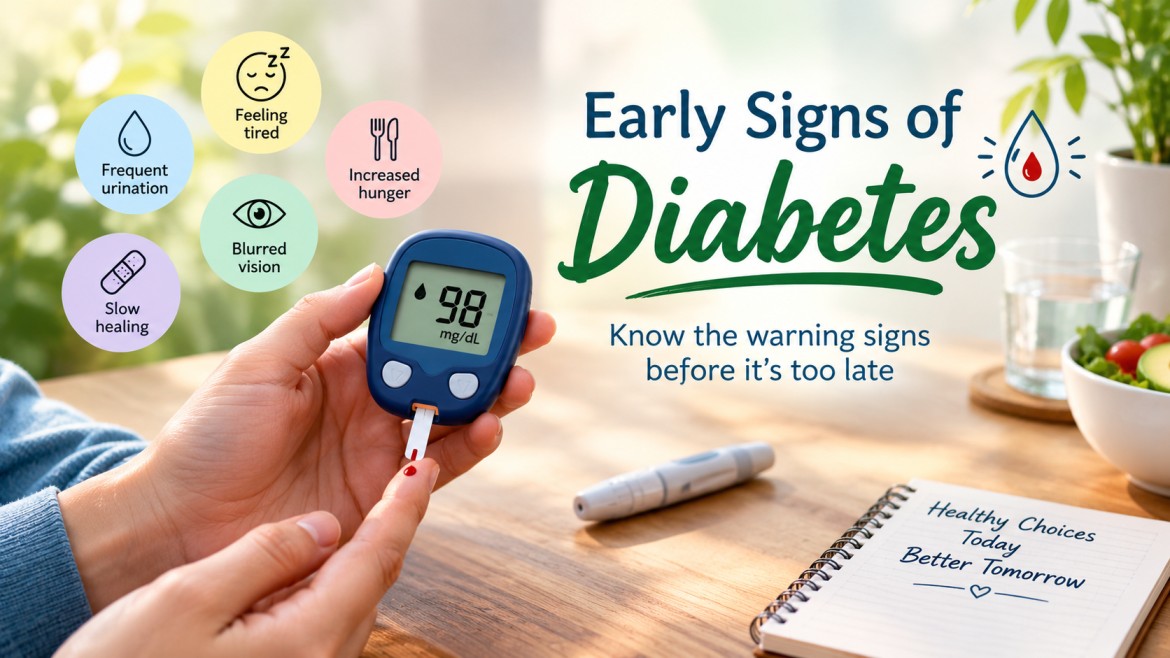
1. Increased Thirst and Dry Mouth
When blood sugar runs high, your kidneys work overtime to filter out the excess glucose. They pull extra water from your body to do it. The result is a thirst that doesn’t really go away no matter how much you drink. A dry mouth that outlasts a normal glass of water often comes with it.
2. Frequent Urination
This one goes hand in hand with the thirst. As your kidneys flush out extra glucose you end up urinating more often. That includes waking up at night to go. For a lot of people this is the very first thing they notice.
3. Unexplained Fatigue
Without enough insulin working properly, glucose struggles to get from your bloodstream into your cells. That’s where it’s actually used for energy. The result is a tiredness that doesn’t track with how much sleep you’re getting or how hard your day was.
4. Blurred Vision
High blood sugar can pull fluid from the lenses of your eyes. That temporarily affects their ability to focus. It’s often mistaken for needing a new glasses prescription. In reality it’s blood sugar related, and it tends to improve once glucose levels stabilize.
5. Slow-Healing Cuts or Wounds
Elevated blood sugar affects circulation and immune response. Both play a role in healing. A minor cut or bruise that’s taking noticeably longer than usual to heal is worth paying attention to. This matters even more if it shows up alongside any of the other signs here.
Early Signs of Prediabetes
Here’s the part most people don’t expect. Prediabetes is often completely symptom-free. The CDC estimates that more than 8 in 10 adults with prediabetes don’t know they have it.
There’s often simply nothing to notice yet. A lot of the warning signs that eventually show up with type 2 diabetes stay silent for a surprisingly long time. Sometimes for years, That’s exactly why routine screening matters more than waiting around for symptoms to force the issue.
Risk Factors That Increase Your Chances
A few factors make early screening worthwhile even without symptoms yet:
- Being over 45, or over 35 with other risk factors
- Carrying extra weight, particularly around the abdomen
- A family history of type 2 diabetes
- High blood pressure or abnormal cholesterol levels
- Limited physical activity
- A history of gestational diabetes during pregnancy
How these signs actually show up can look different depending on who you are. Hormonal shifts tend to mask or mimic diabetes symptoms in women.
That often delays diagnosis, Men are more likely to notice something is off only after a seemingly unrelated symptom, like erectile dysfunction, brings them to a doctor.
For parents, the warning signs in children tend to escalate faster. They also look noticeably different from how diabetes develops in adults.
When to Get Tested
You don’t need to wait until symptoms feel serious. A simple A1C or fasting glucose test can catch elevated blood sugar well before it becomes full diabetes.
Both are quick and standard, Some people notice their symptoms getting worse specifically after the sun goes down. Waking up parched or needing the bathroom repeatedly through the night is its own distinct pattern worth paying attention to. And if the handful of signs covered here only tells part of your story, the broader picture of how diabetes symptoms progress fills in the rest, from the first subtle changes through the signs that need emergency care.
FAQs
How early can diabetes symptoms appear?
Type 1 diabetes symptoms can appear within days to weeks, often suddenly. Type 2 diabetes typically develops more gradually. It can take several years, which is part of why early signs are so easy to miss.
Can you have diabetes for years without knowing?
Yes. Type 2 diabetes in particular can go undiagnosed for years. Early blood sugar elevations often don’t produce noticeable symptoms.
What blood test detects diabetes early?
An A1C test measures average blood sugar over roughly three months. A fasting glucose test is the other common option. Your doctor can order either as a standard early screening tool.
Final Thoughts
Catching diabetes early isn’t about becoming hyper-vigilant over every tired afternoon. It’s about knowing the pattern.
Persistent thirst, Frequent urination, Fatigue that doesn’t add up. A cluster of these is a reason to get a simple blood test, not a reason to panic.
If any of this sounds familiar, that conversation with your doctor is worth having sooner rather than later.