That two-week wait between “maybe” and “know for sure” can feel endless.
Table of Contents
ToggleWhether your period is a few days late or you just have a feeling, a home pregnancy test is usually the fastest way to get an answer.
But here’s the thing: the test itself is simple, yet a surprising number of people get a confusing or inaccurate result simply because of *when* or *how* they took it.
How a Pregnancy Test Actually Works
Every home pregnancy test, no matter the brand, is built to do one thing: detect a hormone called **human chorionic gonadotropin (hCG)** in your urine.
Your body starts producing hCG shortly after a fertilized egg implants in the uterine lining, and the level roughly doubles every couple of days in early pregnancy.
Once it crosses a certain threshold, a home test can pick it up. That’s also why timing matters so much, which we’ll get to in a moment.
Types of Pregnancy Tests You Can Choose From
Not all tests work the exact same way, so it helps to know your options before you buy one.
Line (strip) tests: The classic version. Two lines usually mean pregnant, one line means not pregnant, and no lines at all means the test didn’t work properly.
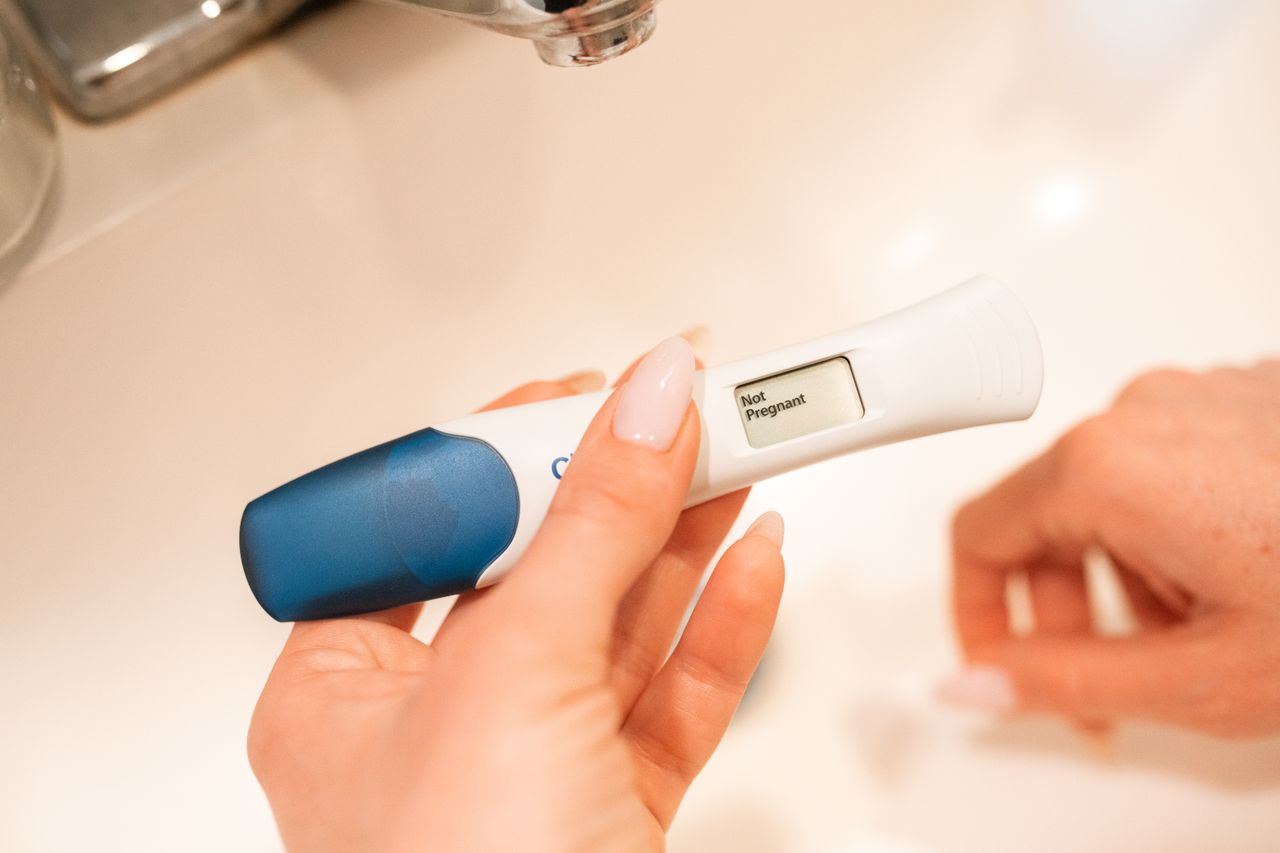
Digital tests: These display the words “Pregnant” or “Not Pregnant” instead of lines, which removes the guesswork of reading a faint line.
Midstream tests: You hold the absorbent tip directly in your urine stream.
Cup/dip tests: You collect urine in a clean cup first, then dip the test strip in for a set number of seconds.
Blood tests: Done at a clinic or lab, these measure hCG directly in your bloodstream. They’re more sensitive than urine tests and can sometimes detect pregnancy earlier, but they require a healthcare visit and lab processing time.
For most people, a urine-based home test is the first step, with a doctor’s visit and possibly a blood test to follow up on the result.
When Should You Take a Pregnancy Test?
This is where most false negative tests come from, so it deserves its own section.
After a missed period is the most reliable time to test. By then, hCG levels are typically high enough for even standard-sensitivity tests to detect.
Before a missed period you’ll need an “early result” or high-sensitivity test, and even then, testing too soon can miss a real pregnancy simply because hCG hasn’t built up yet.
Time of day matters early on testing with your first urine in the morning gives you the most concentrated sample, since hCG is diluted if you’ve been drinking fluids throughout the day.
If your cycle length varies month to month, it’s easy to misjudge when your period is actually “late.” A pregnancy due date calculator can help you track your cycle and figure out the earliest realistic day to test.
How to Take a Home Pregnancy Test
1. Check the expiration date :
An expired test can give an unreliable result even if you do everything else correctly.
2. Read the instructions for your specific test :
Sensitivity, wait time, and testing method vary by brand, so don’t assume every test works identically.
3. Collect your sample :
Either hold the tip in your urine stream for the number of seconds listed on the box, or collect urine in a clean, dry cup and dip the strip in.
4. Lay the test flat and start a timer :
Most tests need 3–5 minutes to develop. Checking too early or too late can distort the result.
5. Read the result within the recommended window :
A line (or symbol) that appears after the stated time frame is sometimes called an evaporation line, and it shouldn’t be counted as a valid result.
How to Read the Result of Pregnancy Test Strip
Two lines, a plus sign, or “Pregnant” on a digital test generally means positive, even if one line is faint. Any visible test line usually counts as a positive.
One line (the control line only) or “Not Pregnant” means negative, meaning hCG wasn’t detected at the time of testing.
No control line at all, or a blank/error display on a digital test, means the test didn’t work. Discard it and try again with a fresh one.
Common Mistakes That Throw Off Results
Even a well-made test can give a misleading result if it’s used incorrectly.
- Testing too early, before hCG has had time to build up
- Drinking a lot of fluids beforehand, which dilutes urine and lowers hCG concentration
- Reading the result outside the time window stated in the instructions
- Using an expired or improperly stored test
- Certain medications or medical conditions that can occasionally interfere with hCG readings
Following the instructions on your specific test, rather than relying on general advice, is the single biggest factor in getting an accurate result.
What If Your Result Doesn’t Match What You Expected?
A negative result doesn’t always mean “not pregnant,” especially if you tested early. If your period still doesn’t arrive in the days that follow, retesting with first-morning urine, or switching to a more sensitive test, is a reasonable next step. We’ve covered this exact scenario, getting a negative result when you suspect otherwise, including the specific medical reasons a test can miss a real pregnancy.
If you get a positive result, the next step is usually scheduling an appointment with your doctor to confirm the pregnancy, discuss a blood test if needed, and start prenatal care with the help of 2nd months pregnant belly.
Frequently Asked Questions
How soon can I take a pregnancy test after a missed period?
You can test as soon as the day your period is due. For the most reliable result, many healthcare providers suggest waiting a few days to a week after a missed period.
Can stress or anxiety affect a pregnancy test result?
Stress itself doesn’t change hCG levels, but it can disrupt ovulation timing, which can shift when your period actually arrives. That sometimes makes a “late” period look like a red flag when it isn’t.
Is a very faint line a positive result?
In most line-based tests, any visible second line within the reading window counts as positive, since it means hCG was detected, even at low levels. If you’re unsure, retesting in 2–3 days with first-morning urine usually gives a clearer line.
Are home pregnancy tests as accurate as tests at the doctor’s office?
When used correctly and at the right time, most home urine tests are around 99% accurate, similar to a clinical urine test. Blood tests done at a lab are more sensitive and can sometimes detect pregnancy a little earlier.
The Bottom Line
Taking a pregnancy test is straightforward, but getting an accurate result comes down to a few small details.
Testing at the right time, using first-morning urine when testing early, and reading the result within the window your test specifies.
If your result leaves you with more questions than answers, waiting a few days and retesting, or checking in with your doctor, is always a reasonable next step.